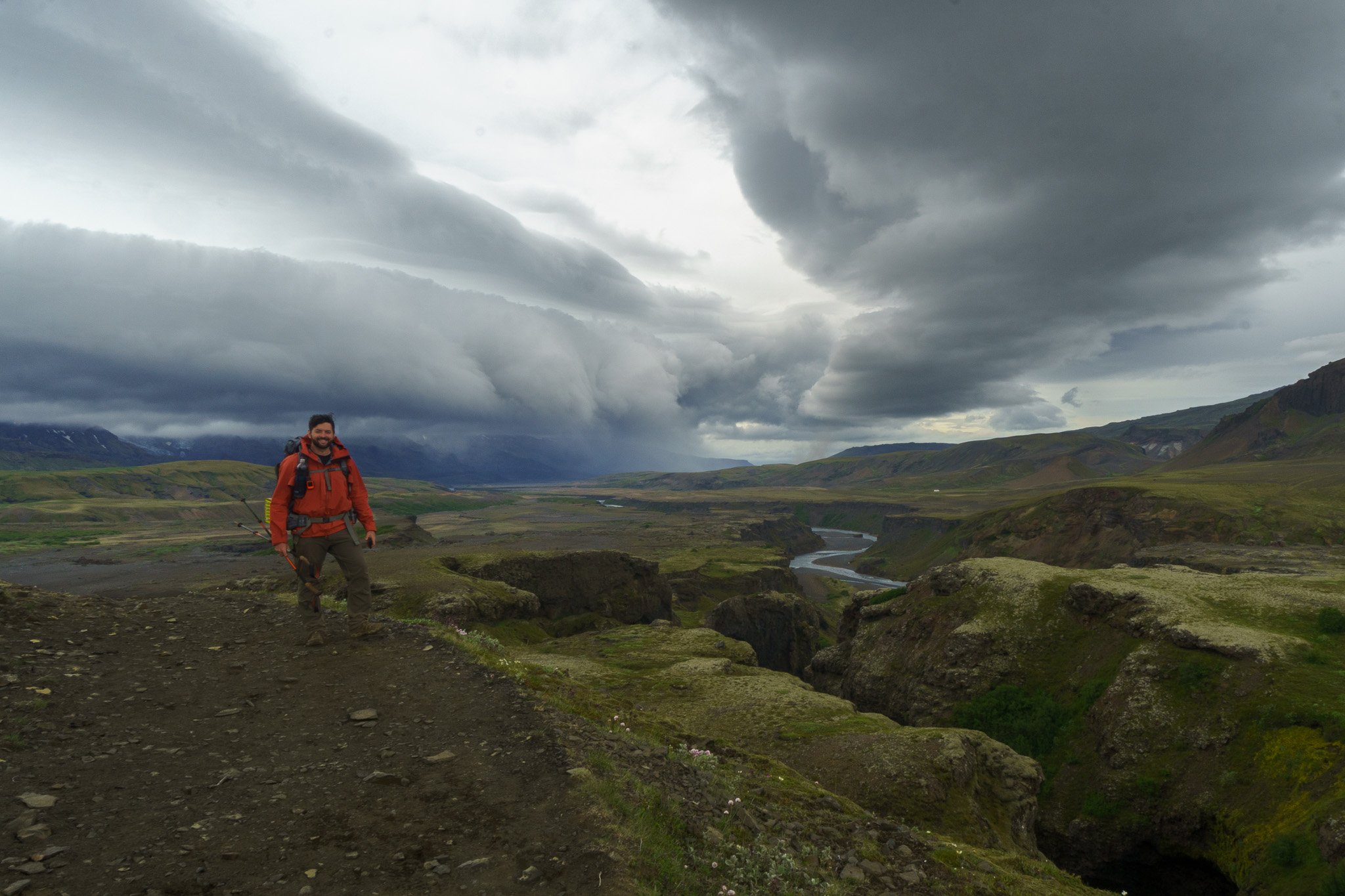
Valleys and Volcanoes in Northern Costa Rica

December in New Jersey usually means cold mornings, crowded stores, and the kind of gray skies that make you want to give yourself a bloody nose, just so you can see a bit of color.
As Ariana and I felt the annual winter fatigue creeping in, we started tossing around the idea of going somewhere warm for the holidays, but not in the palm-tree resort sense. We wanted something wilder. A Christmas spent in the living jungles rather than staring at a slowly dehydrating Douglas Fir in our living room.
Costa Rica kept coming back into the conversation. A tiny country with a global reputation for biodiversity, volcanoes, cloud forests, and a national philosophy centered around pure life. Pura vida.
Home to cloud forests that cradle five percent of all species on the planet, unlike many of its neighbors, Costa Rica abolished its military in 1949 after a brief civil war and poured its budget into education and conservation instead. As a result, half the country feels like one enormous biology lab.
And so we set out to trade mistletoe for misty mountains and set off for the jungles of Costa Rica. A week in the land of rainforests, sloths, volcanoes, and Christmas lights strung across ceiba trees. We packed our bags with hiking gear rather than sweaters and stepped into the holiday season looking for something different.
Day 1: the Land of Pura Vida & into the Green of La Tigra
We touched down in San José late on one of those warm December nights that make you feel like you have cheated your way out of winter. The air had that mix of car exhaust, city dust, and distant greenery.
We got our rental car and made our way to Alajueja City Hotel and Guest House for the night.
The next morning, we wondered about the city for a bit. The parks were vibrantly decorated for Christmas and New Years. Alajuela felt calm but alive. A good landing spot. A soft arrival before the rainforest swallowed us whole.
We stumbled upon a statue of Juan Santamaría. Hero of the war against a mercenary expansionist who decided to invade Central America and create his own little empire, manifesting his destiny from the American South into South America. William Walker. The kind of historical figure who makes you think, yes, some chapters of history really do begin with a collective sigh.
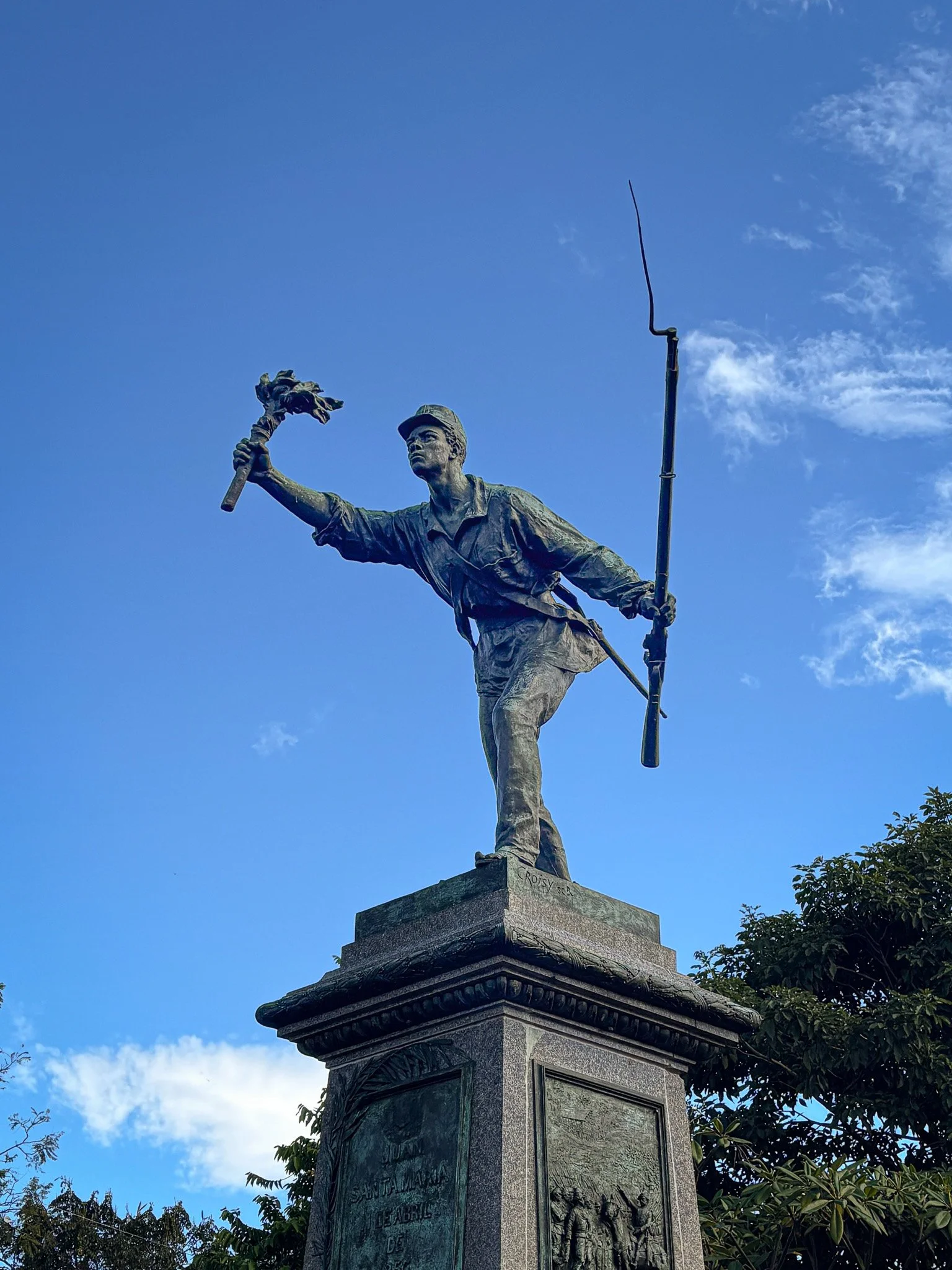
The local museum was closed that day, but I learned Jose Santamaría died running toward a fortification with a torch to stop Walker’s troops. Costa Rica remembers him. Statues. Streets. Murals. Even our hotel lobby had a painting of the guy charging forward through smoke. Bad-ass.
We soon hopped in the car and left the city, heading north toward La Tigra, a quieter area tucked into the foothills near Arenal Volcano. The road wound through rolling farmland before dissolving into dense rainforest. Everything turned green so fast it felt like someone had adjusted the saturation on the entire country.
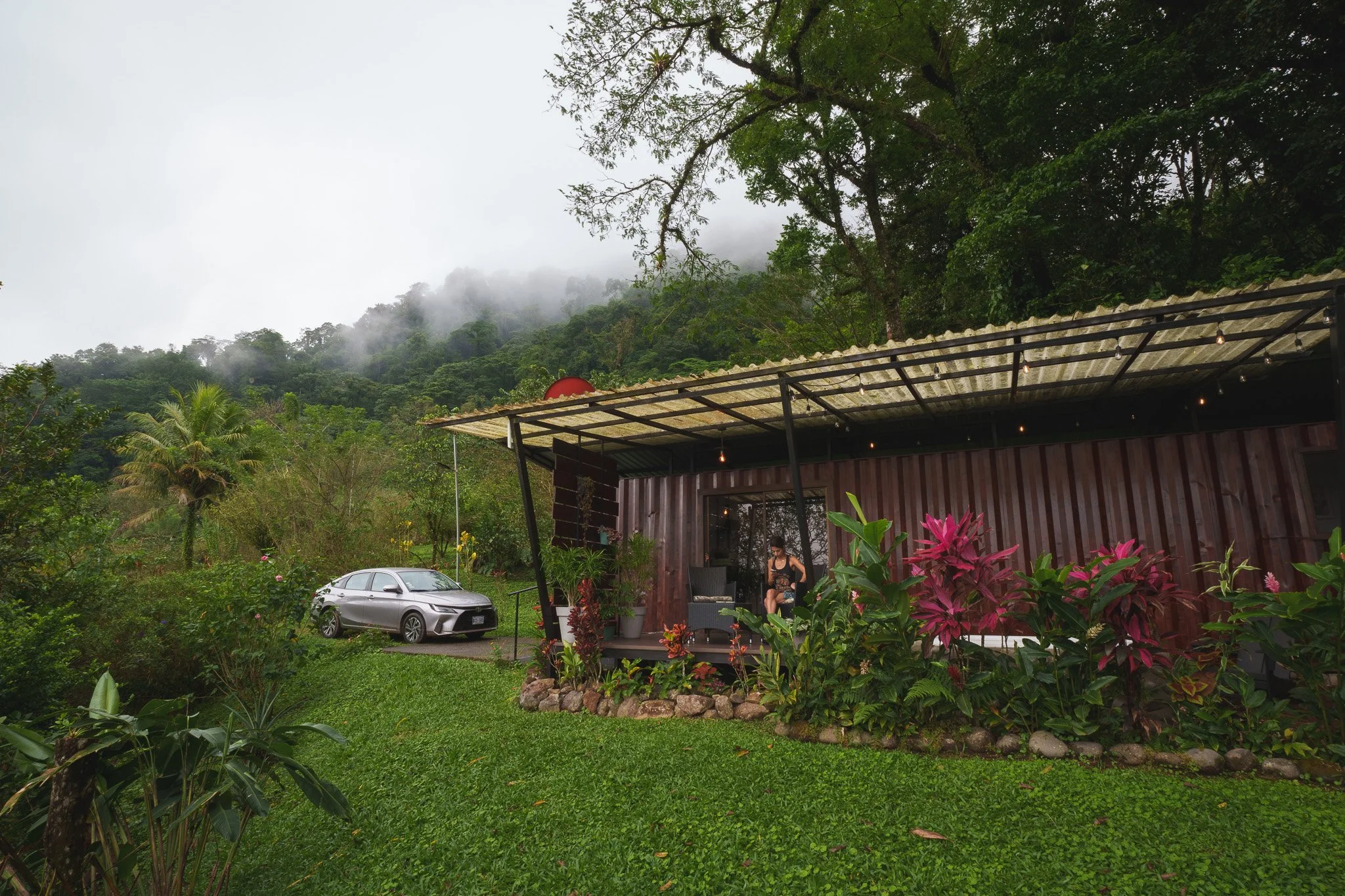
We drove past waterfalls and more than the occasional sketchy cliff, before finally making it to our cozy cabin. Overlooking a rainforest valley, where the clouds were afraid of heights and the mornings came with the roar of howler monkeys instead of alarm clocks.
We were greeted by our gracious host, Iván, and he gave us a tour of his meticulously crafted shipping container-turned-airbnb, and we settled in for the night.
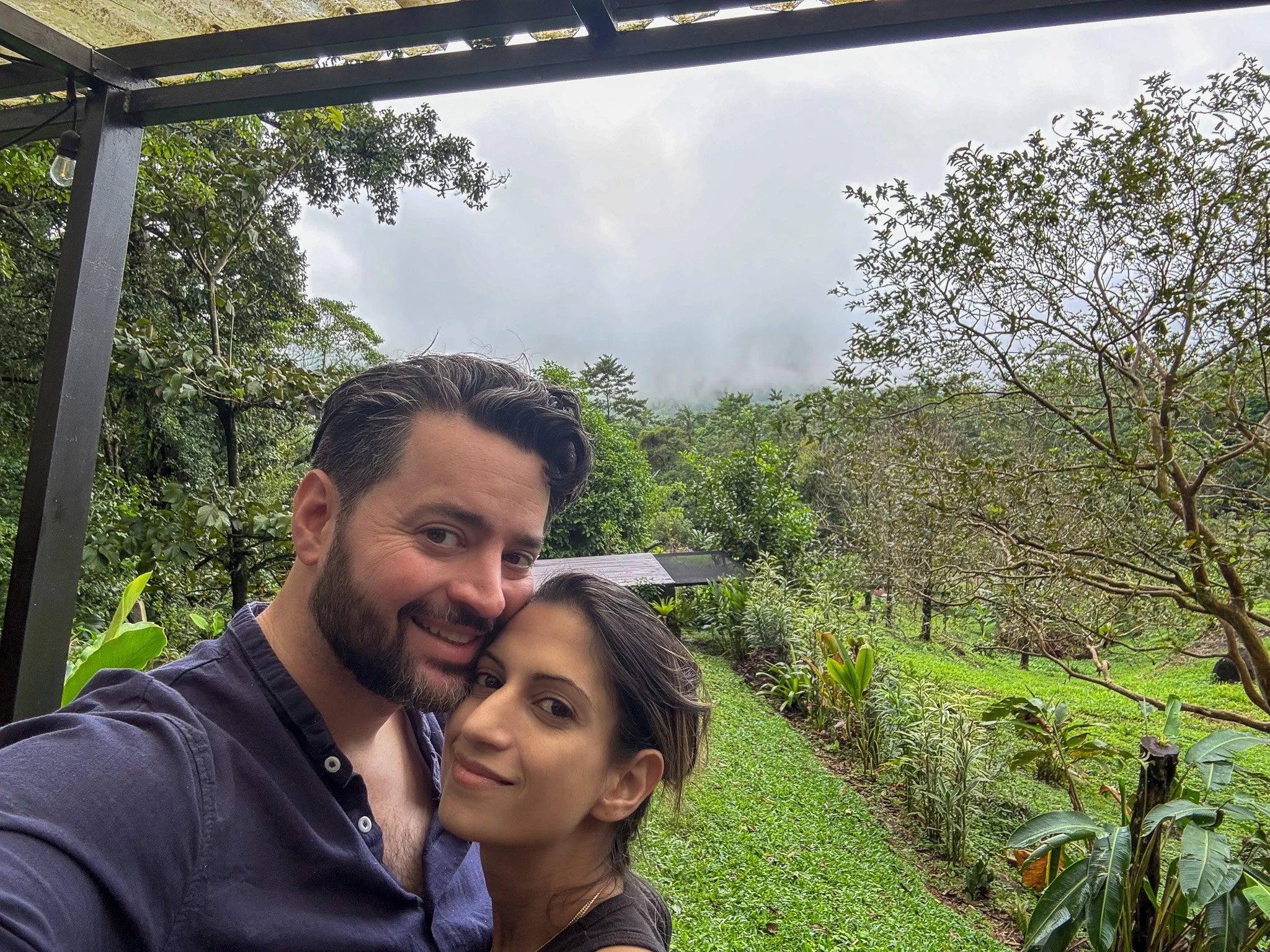

Impromptu hot-tub photoshoot
Day 2: Walking Above a Living World
The sun rose as we watched the morning clouds pass in the valley below, sipping on our fresh Costa Rican coffee. We took our time getting to know the surrounding jungle.
By late morning, we head out into the nearby tourist hub town of La Fortuna. Established as a small agricultural community in the mid-20th century, by the first quarter of the 21st, the town quickly embraced Costa Rica’s growing adventure tourism industry. Ziplining, white-water rafting, hiking, and canopy tours are major draws, turning the town into a hub for thrill-seekers and nature lovers alike.
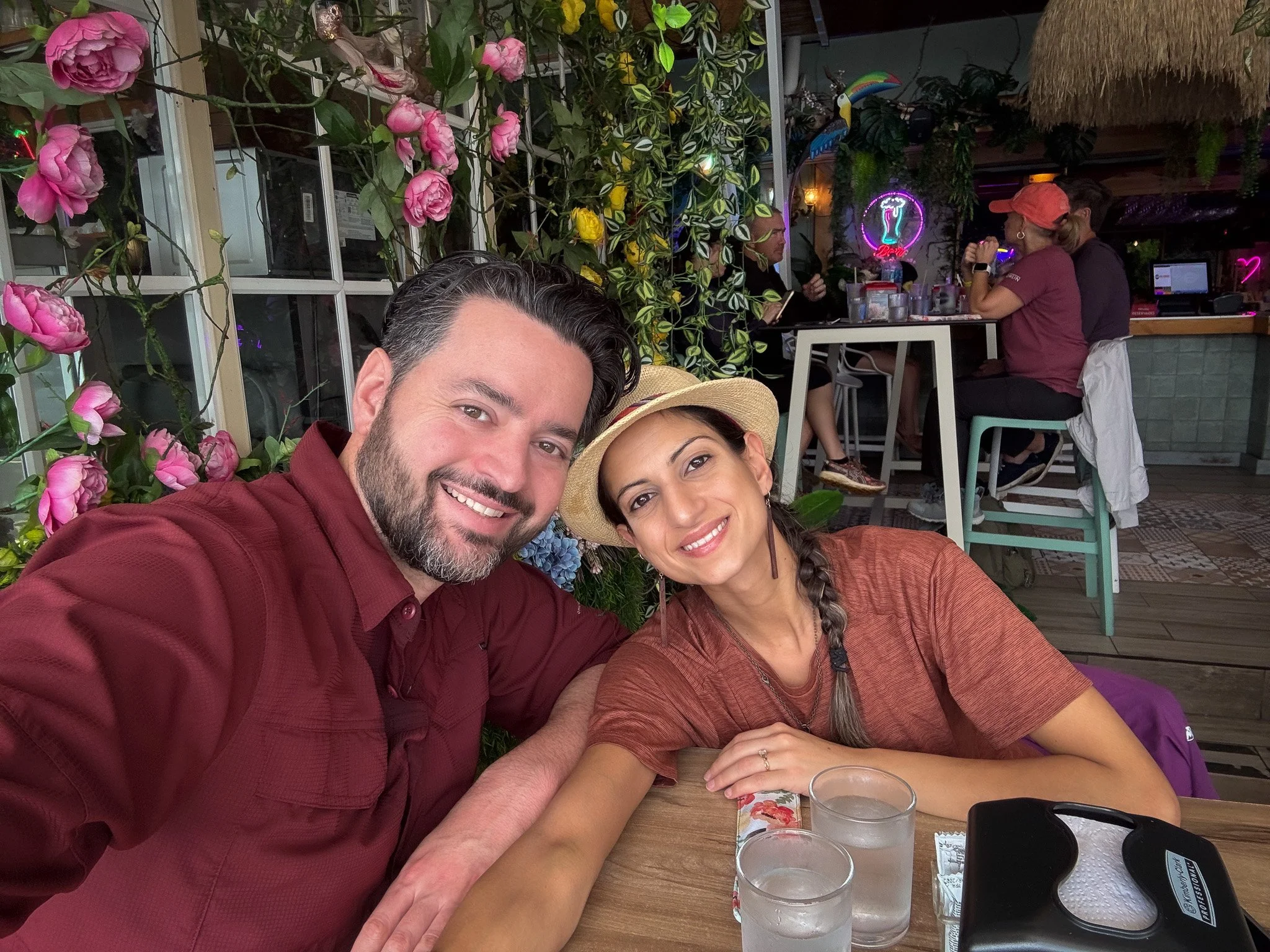
On this day, La Fortuna was a bustling yet welcoming town. Its streets were lined with busy shops and restaurants. We stopped in one particularly alluring one for a quick lunch.
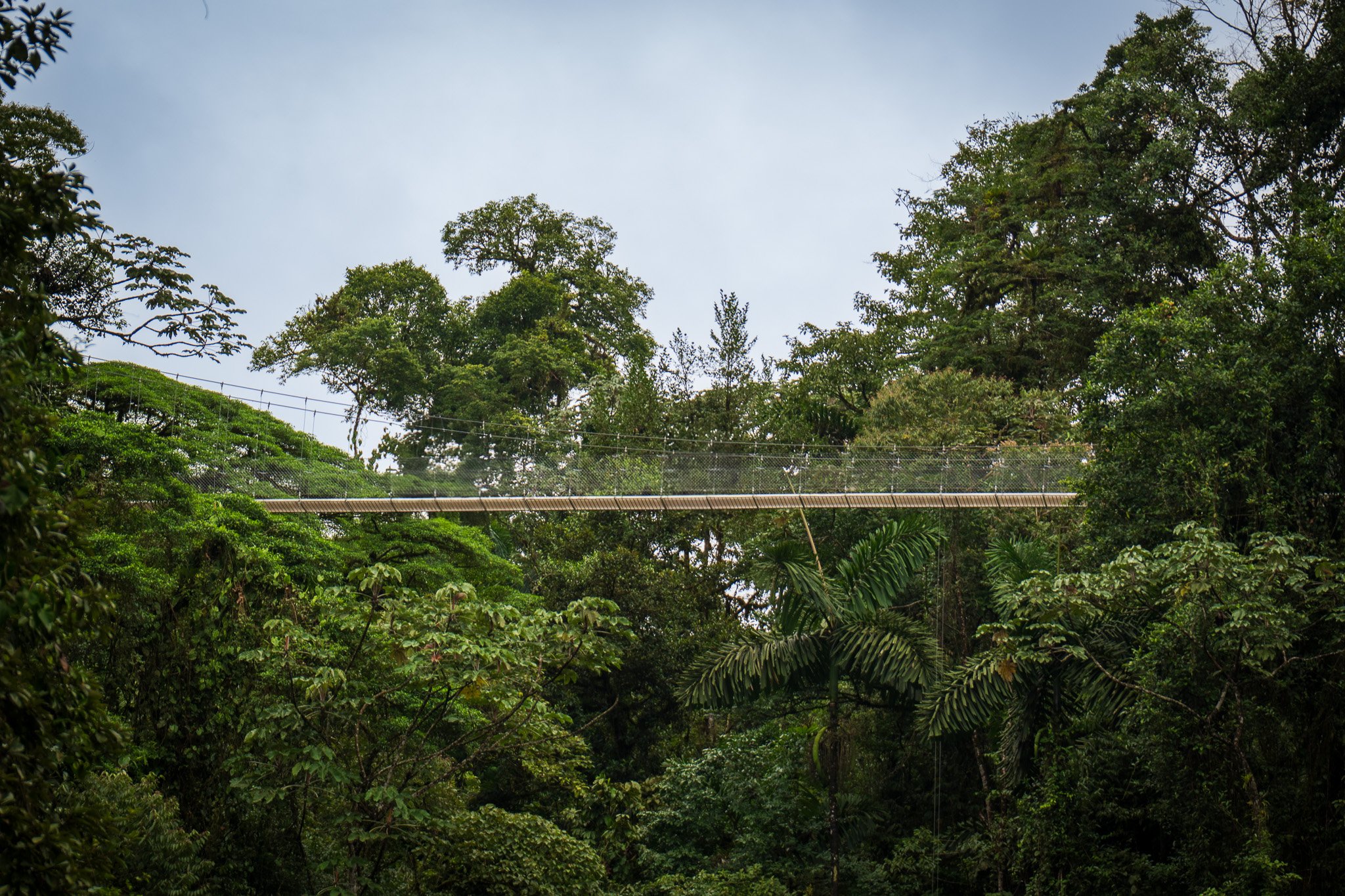
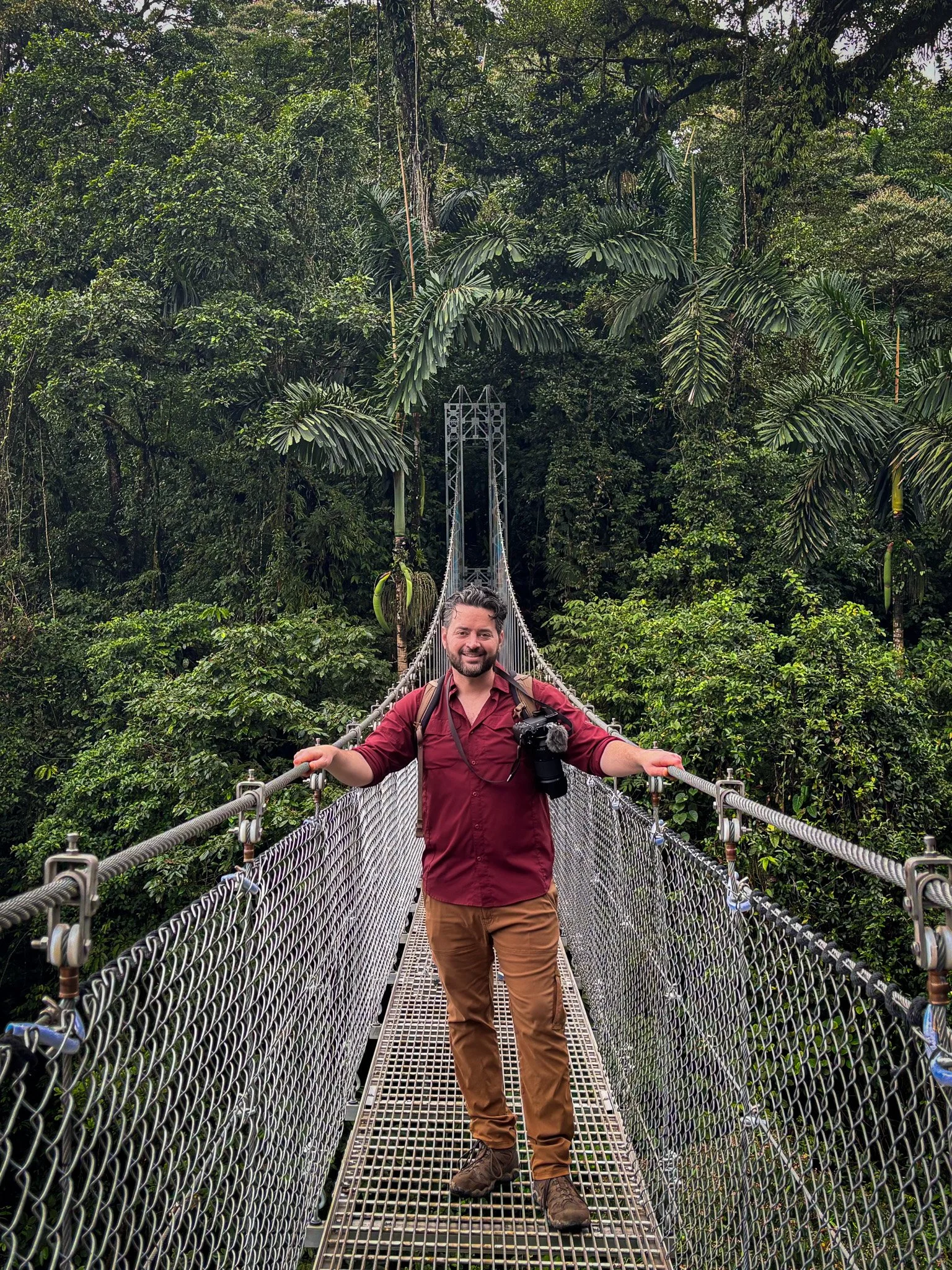
But our main goal for the day was visiting the Mistico Arenal Hanging Bridges Park. Walking through the canopy on those suspension bridges felt like stepping into a different planet. Everything was dripping, glowing, pulsing with life. There were orchids growing out of other plants. Epiphytes clinging to branches. Bromeliads holding tiny pockets of water where insects and frogs lived entire hidden lives.

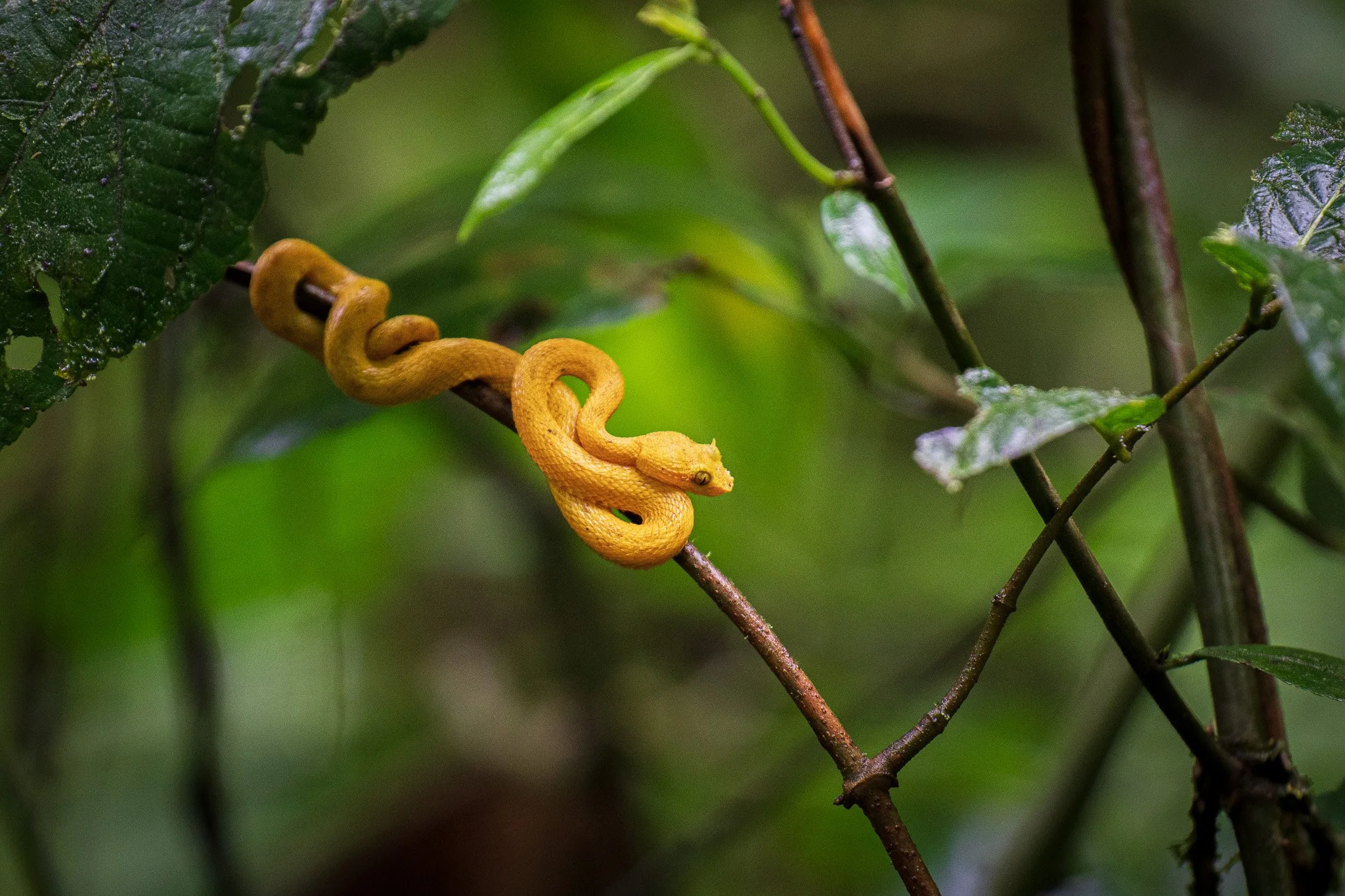
The highlight was spotting the elusive bright yellow eyelash viper. It sat perched on a branch as if it had been placed there by a stage director. Tiny. Beautiful. Capable of ruining your entire week.
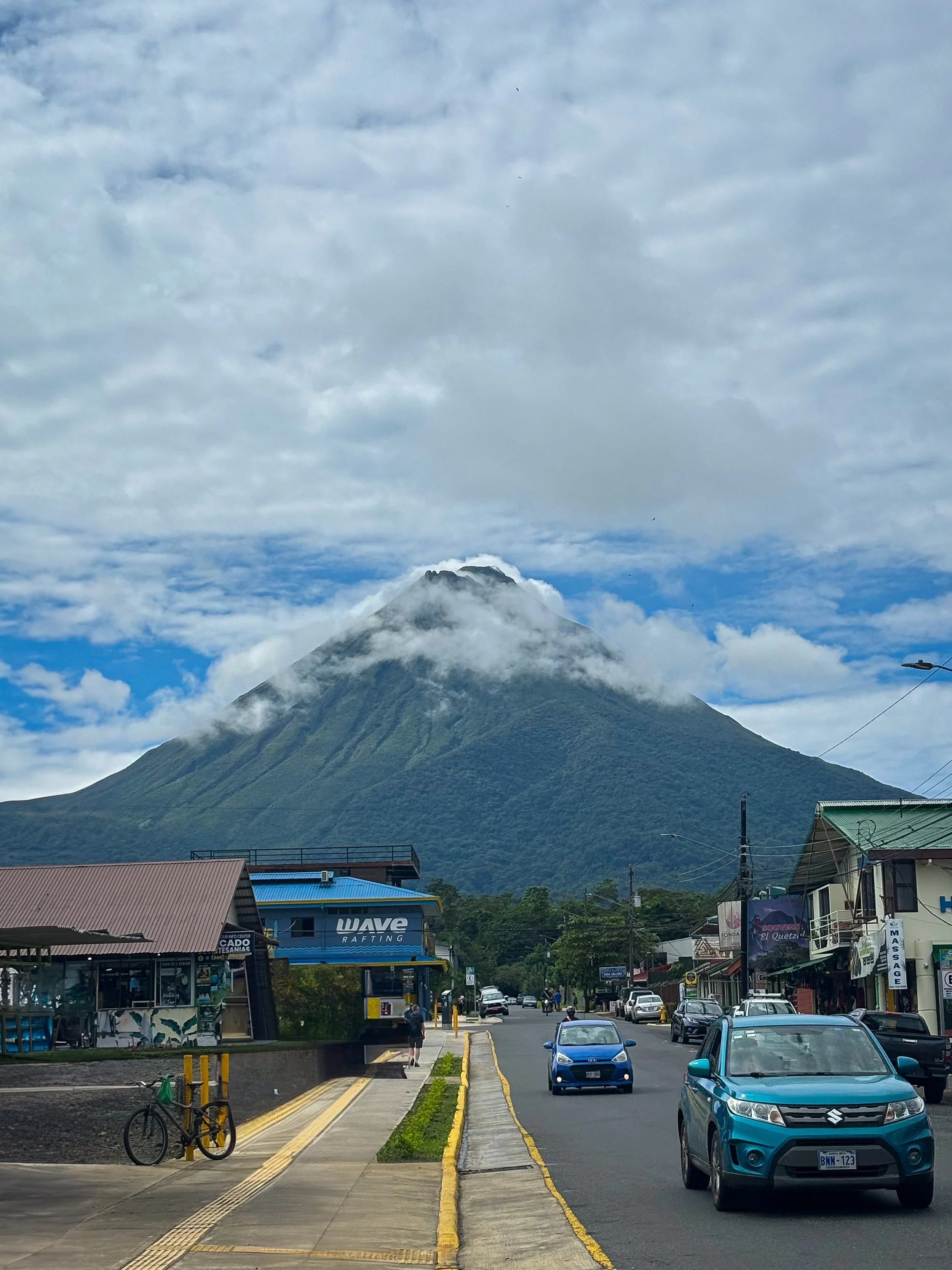
It was cloudy most of the day, but on the way back to the cabin, the clouds broke just enough for Arenal Volcano to appear. A near-perfect cone rising out of the jungle. Foreshadowing the rest of the week's adventures.
Day 3: Sloths, Coffee, and Chocolate
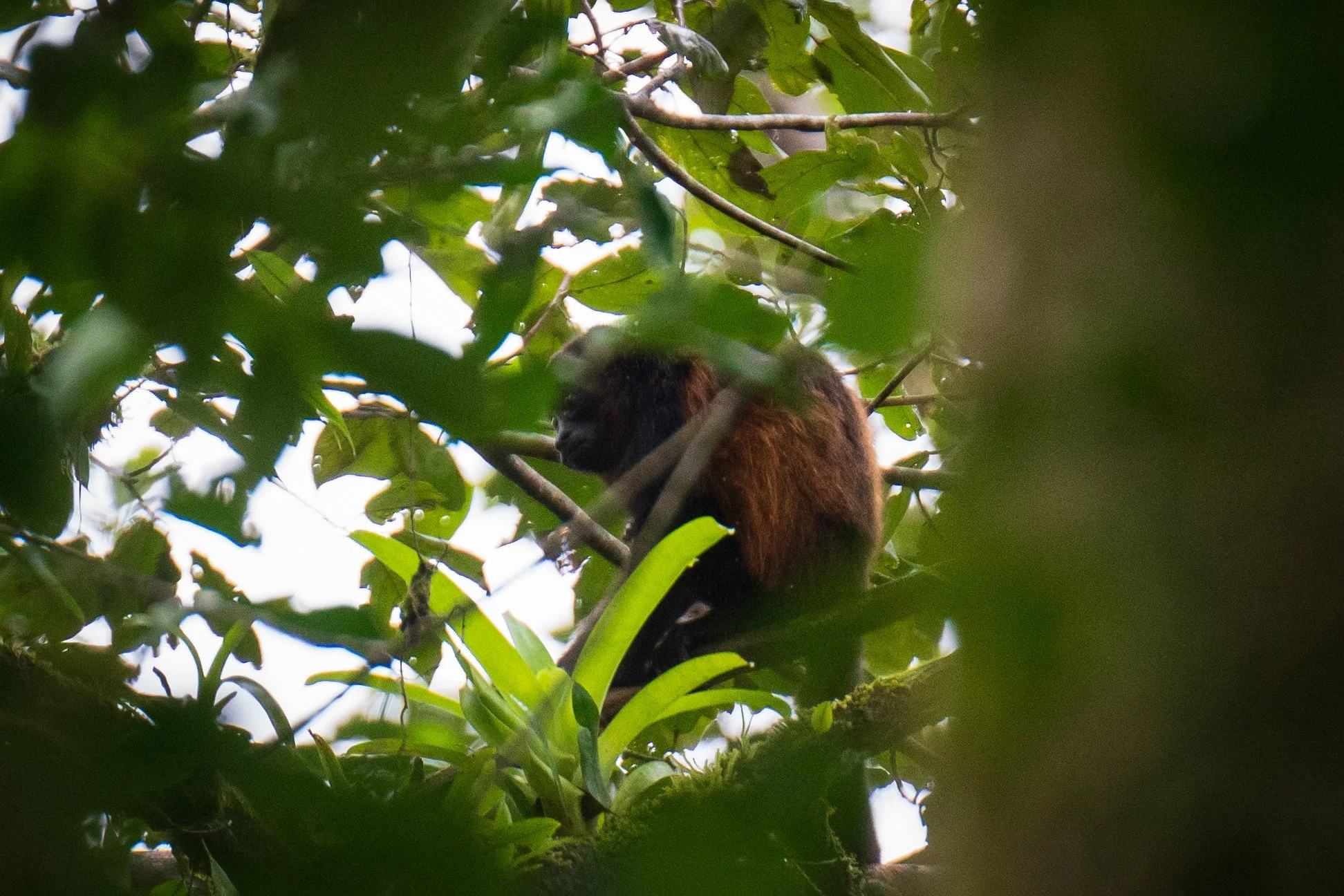
We woke up to the sound of thuds on our metal roof and the roar of Howler monkeys. Their call traveled through the valley like rolling thunder. Hard to believe it came from something that looked like a fuzzy little gremlin chewing leaves. Nature is beautiful, but also sometimes terrifying when you’re half asleep and not expecting it.
We went back out for a ride into La Fortuna, but this time on a mission to find tree sloths. I had prepared myself for disappointment. Sloths have the energy level of a hungover college student and move once every geological epoch, so they might be hard to spot if you don’t know what to look for. But luckily, with the help of a guide, Costa Rica delivered. We spotted the first two-toed sloth curled up like a fuzzy coma patient in the canopy, the only sign of life, an occasional slow scratch of its belly. Then a three-toed sloth lounging horizontally on a branch, slowly blinking like it was contemplating the mysteries of the universe.
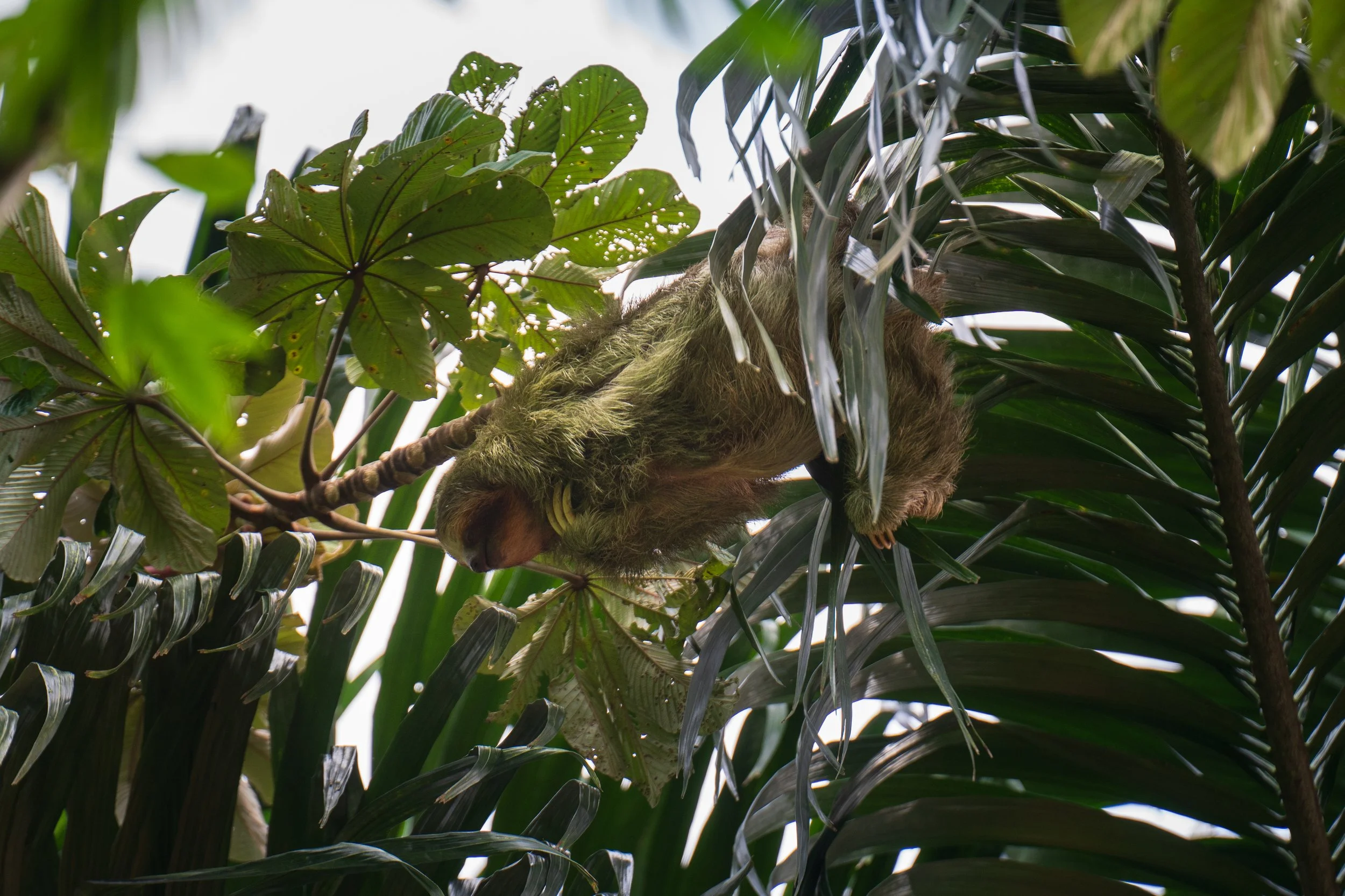
By the end of the jungle walk, Ariana was in sloth heaven, excitingly pointing out any and every non-moving thing in the canopy as a potential sloth sighting.
After the sloths came coffee and cacao. The holy trinity of Costa Rican agriculture.
At a small farm on the outskirts of La Fortuna, we learned about the volcanic soil that makes Costa Rican coffee so good. Rich minerals. High altitude. Careful hand picking. The bean is called the golden bean for a reason. For over two centuries, it has carried the national economy.
Roasted there in front of us, we sipped on the freshest coffee known to man.
Then came cacao. Sacred to indigenous tribes. Once used as currency. We tasted raw cacao pulp straight from the fruit. Sweet. Then bitter. Then chocolate. A transformation that felt alchemical. The guide told us that artisanal chocolate makers are bringing back old varieties that nearly disappeared. Standing under the cacao and coffee trees, the whole place felt like a sanctuary.
Day 4: Bird Watching and Night Walks
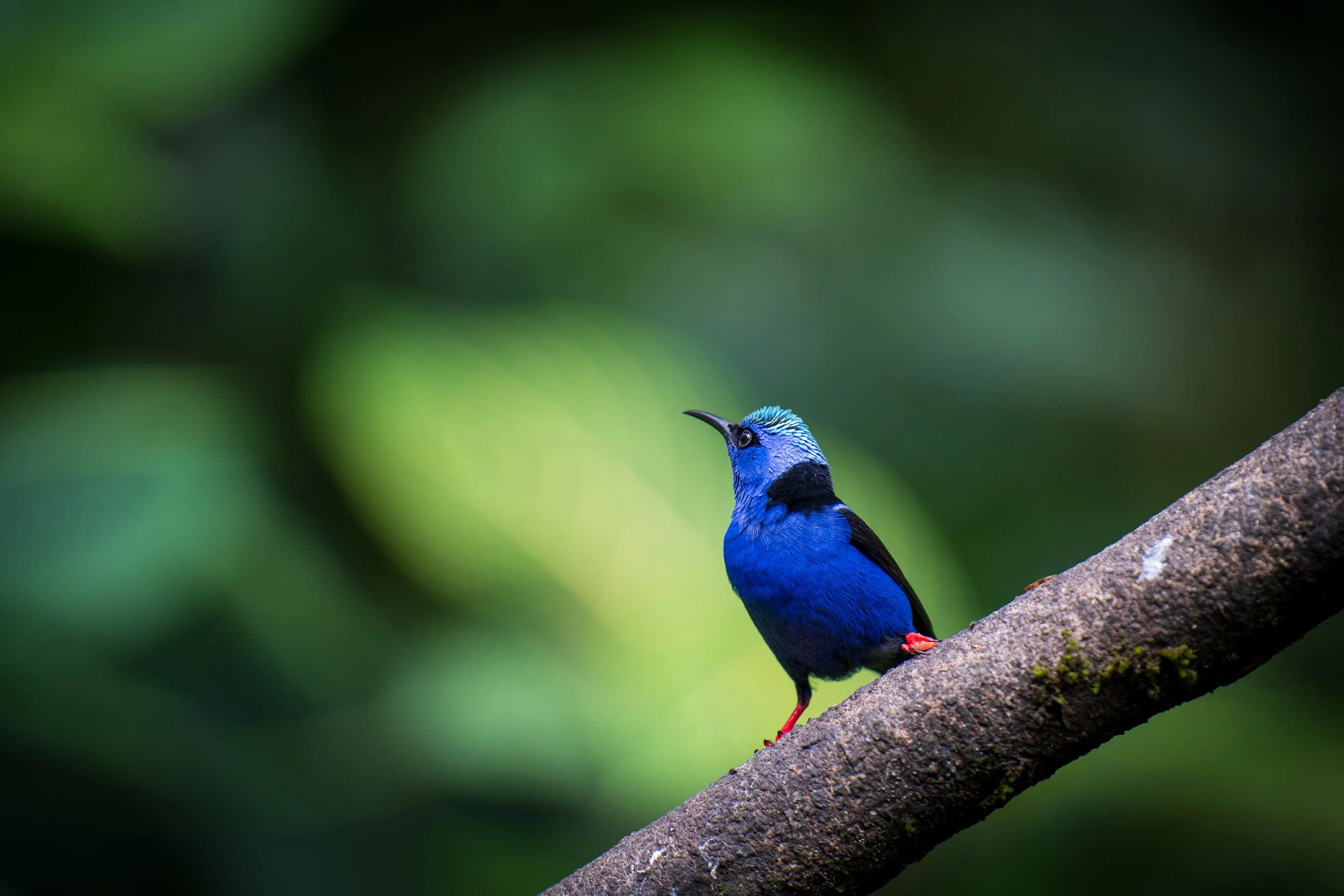
The next day we took it easy with a slow morning and afternoon wandering around our cabin with binoculars in hand as Ariana noted every bird she saw, hunting down tropical birds like they were Pokémon.
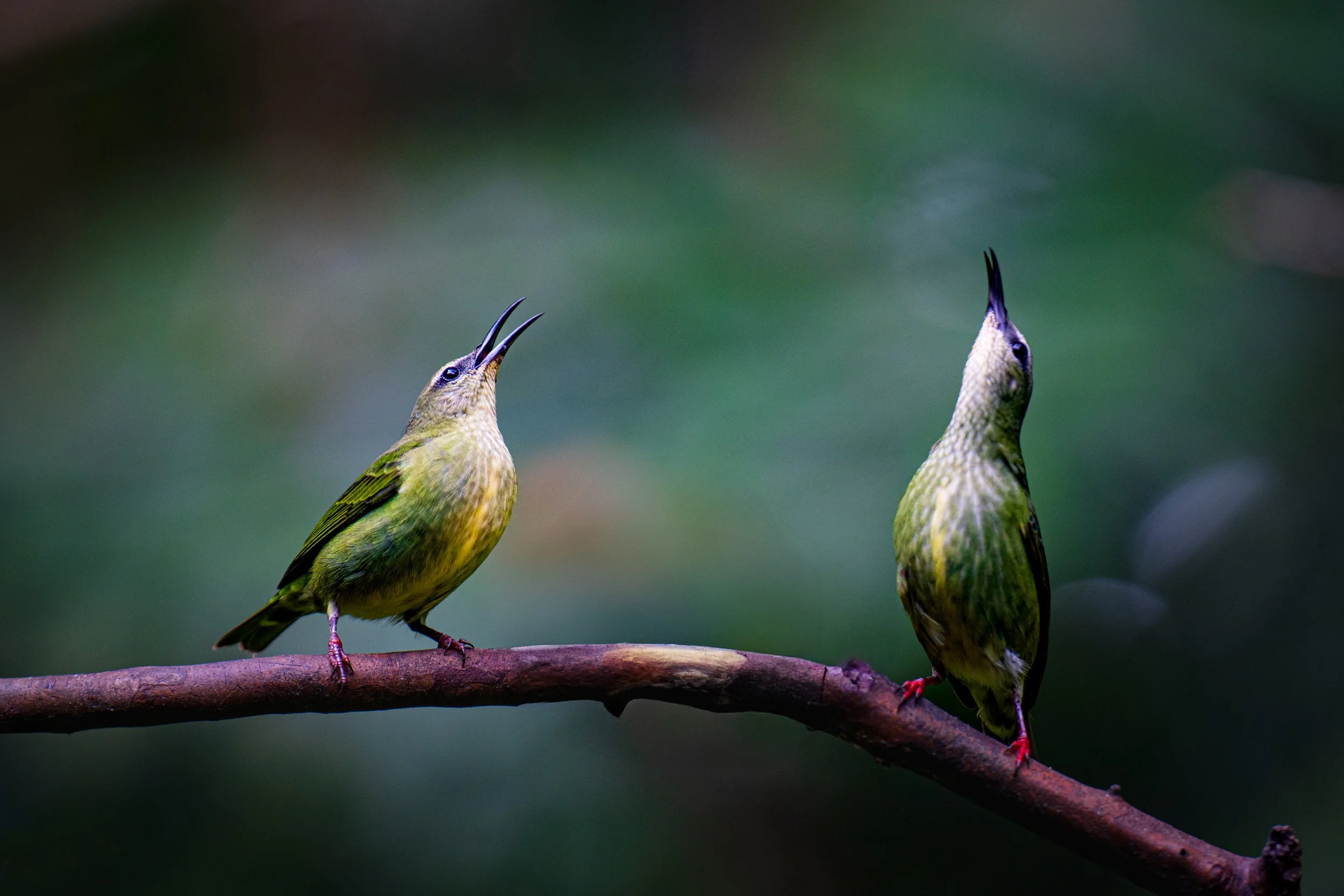

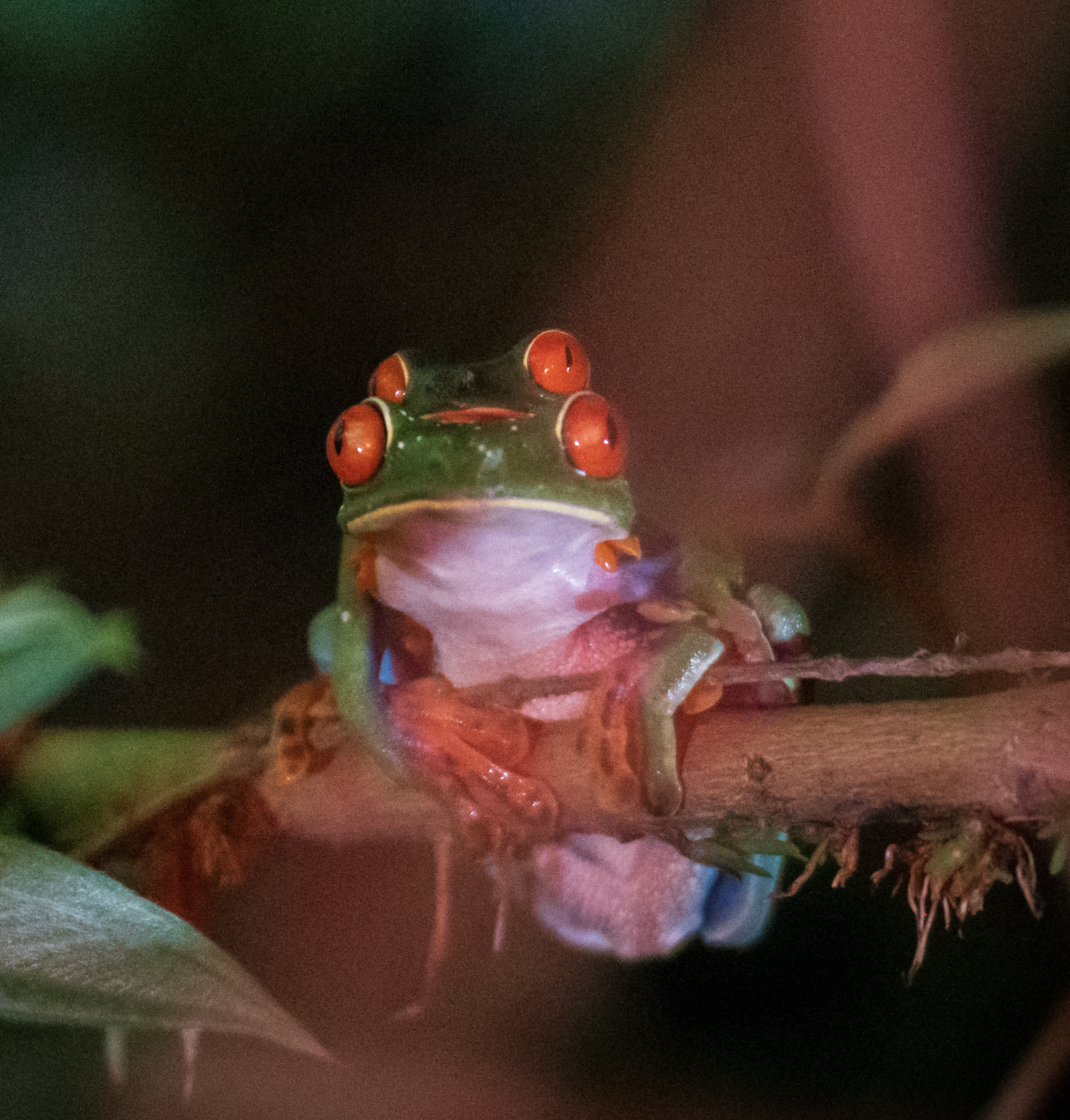
The real goal of the day was to wait out the sun and prepare for the EcoCentro Danaus night walk, the private ecological reserve protects critical habitats for amphibians like the endangered red-eyed tree frog. If the rainforest is impressive during the day, it becomes a full-blown alien world after dark.
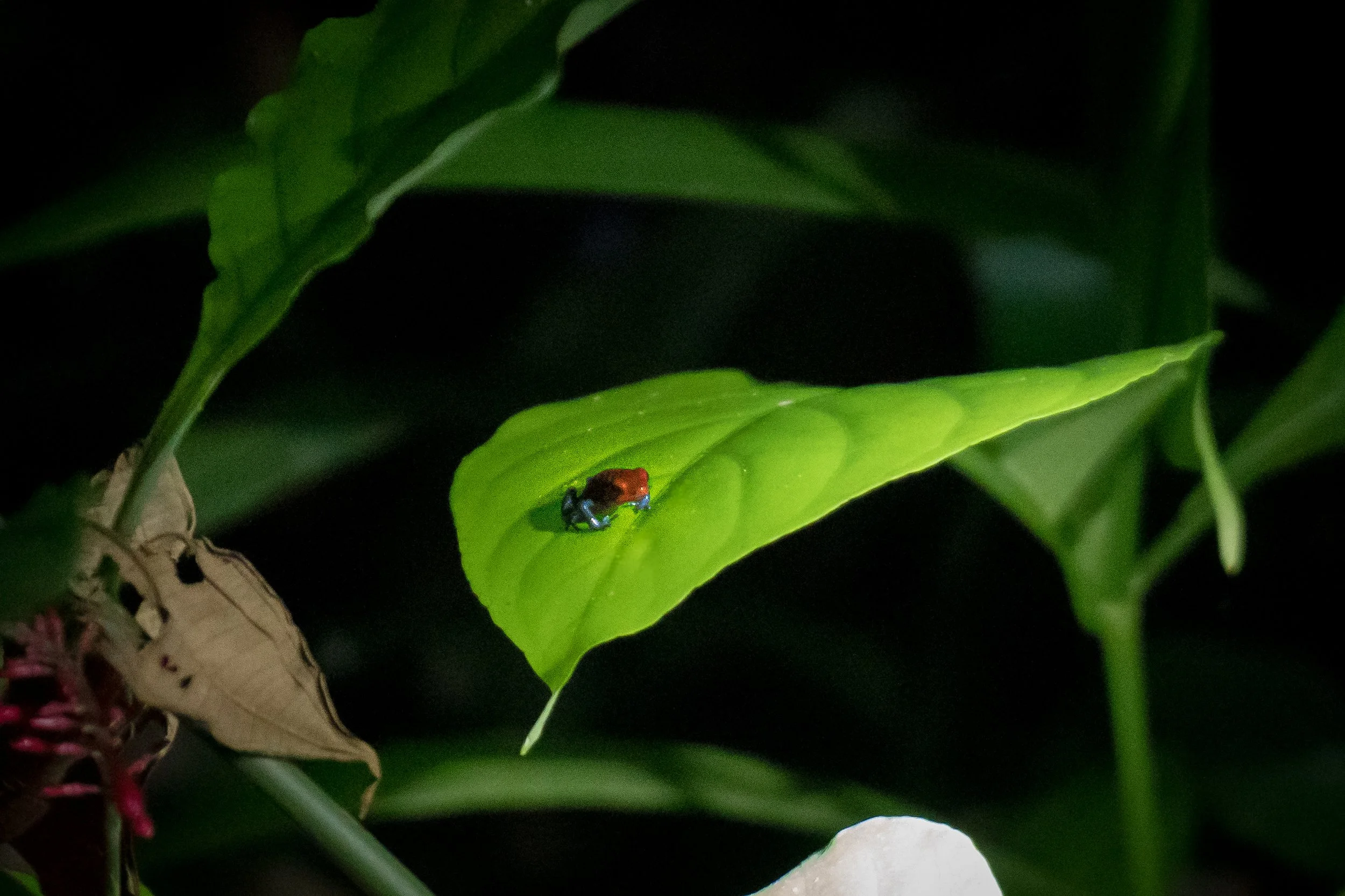
Glass frogs glowing under headlamp beams. Red-eyed tree frogs plastered onto leaves like little neon guardians. And Poison Dart Frogs no bigger than my fingernail.
But the real show-stopper was accidentally stumbling upon a Fer-de-Lance blocking our path, the most venomous snake in Costa Rica.

Our guide warned us that if bitten, it can be fatal within 20 minutes, and the nearest hospital was about an hour away.
“But you guys carry anti-venom, right?”
Ariana asked.
“No…”
After the fer de lance got bored with us, it slithered on its way, and we made our way back to home base unscathed.
Day 5: Arenal Volcano National Park
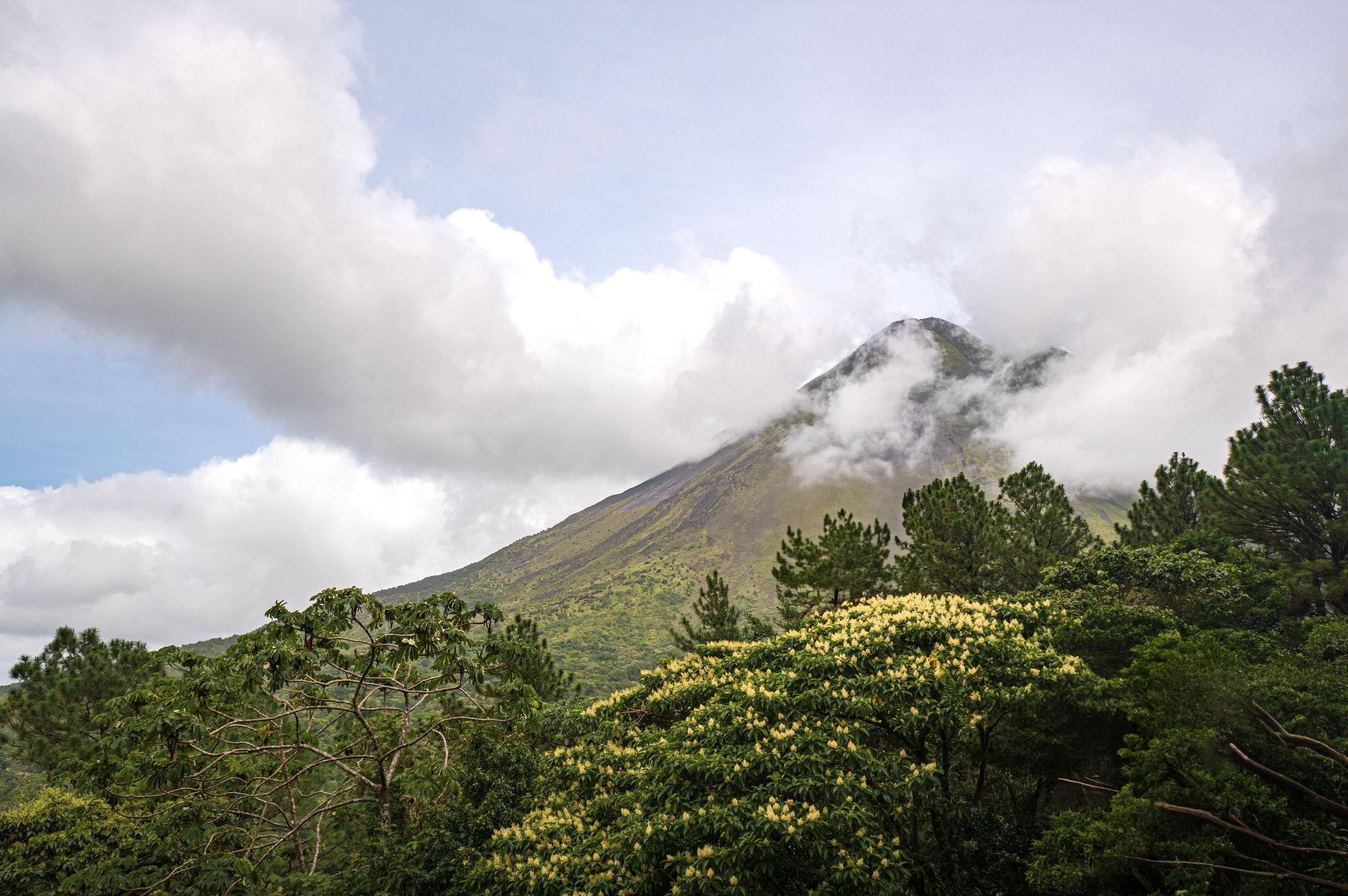
Since day one of this trip, the landscape has been dominated by the Arenal Volcano. This thing just rises out of the landscape like a massive green pyramid, towering over La Fortuna and pretty much anything within a dozen miles. No matter where you’re standing, it feels like the volcano is standing over you, watching.
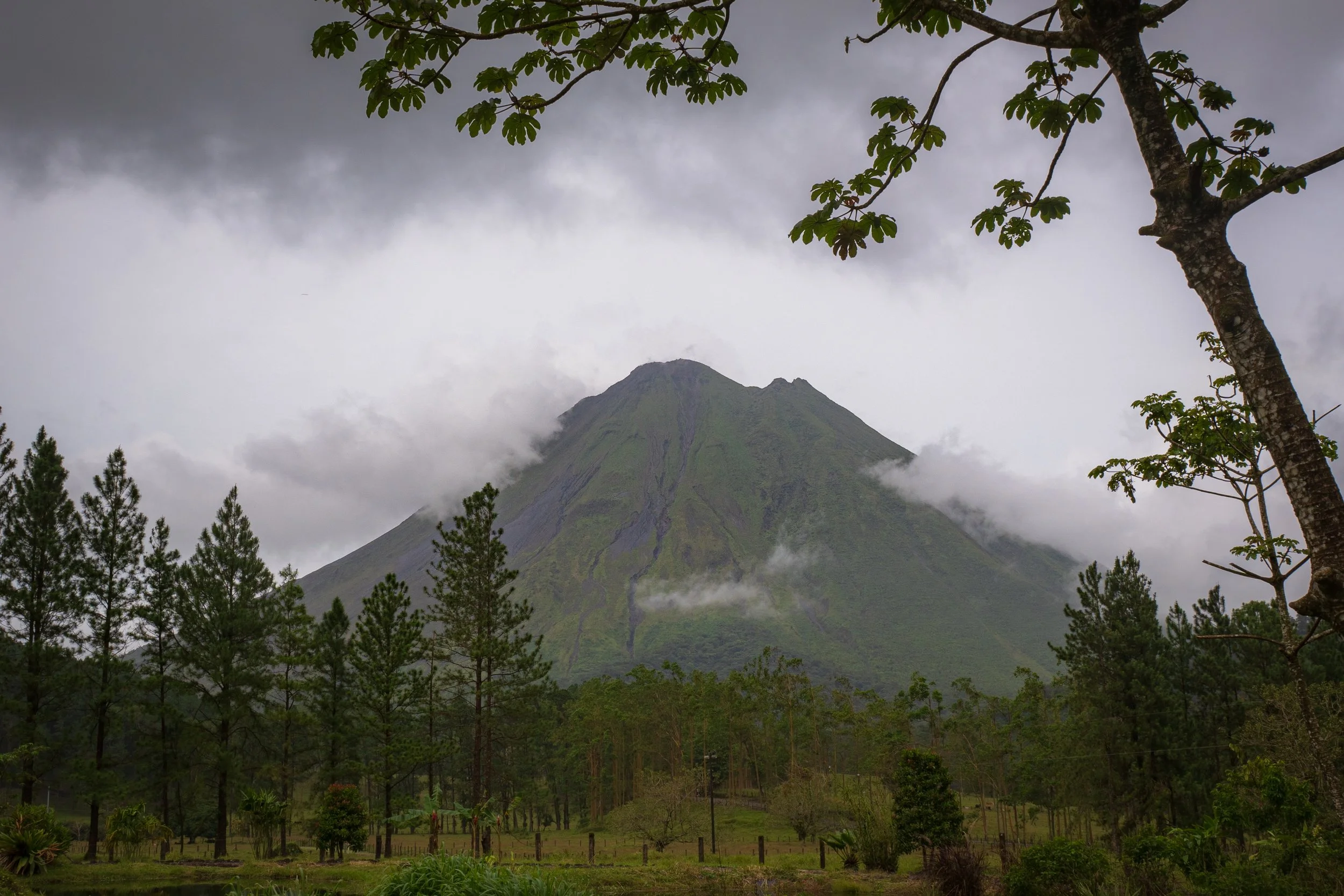
So on this day, we decided to give it a visit up close and personal. Donning our hiking boots, the trails took us through dense, old jungle, the kind where every branch looks like it’s hosting its own micro-ecosystem.
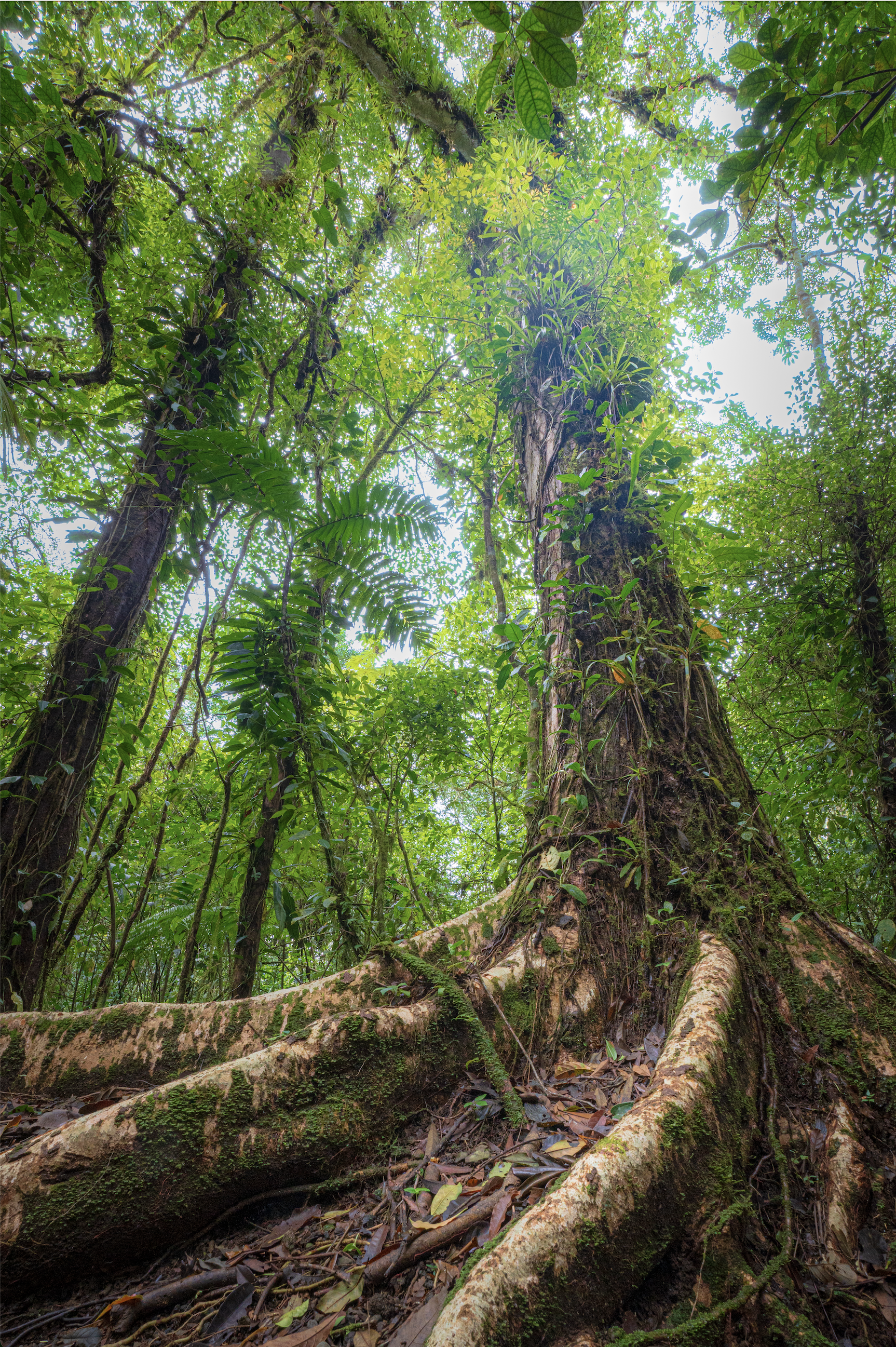
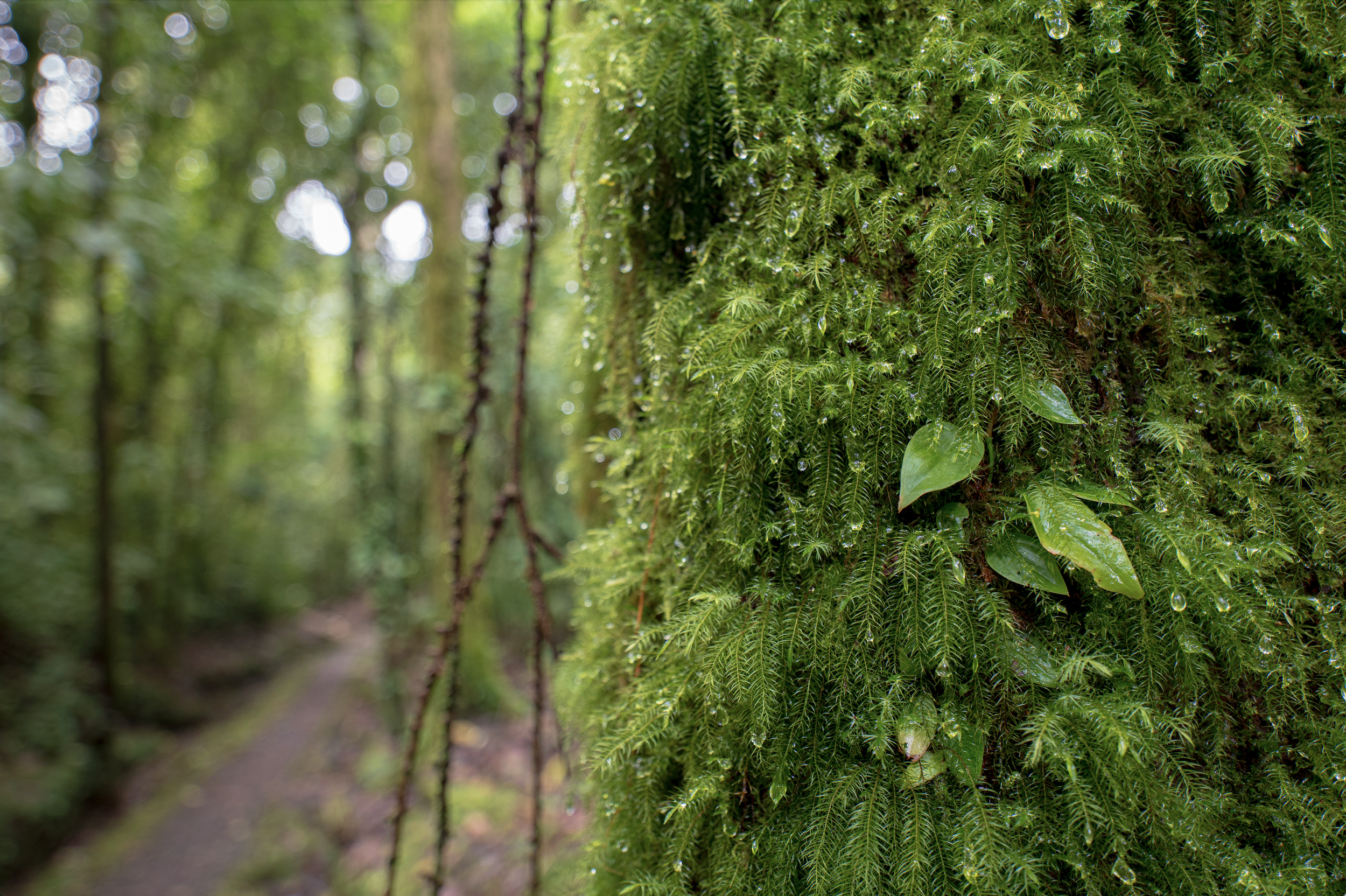
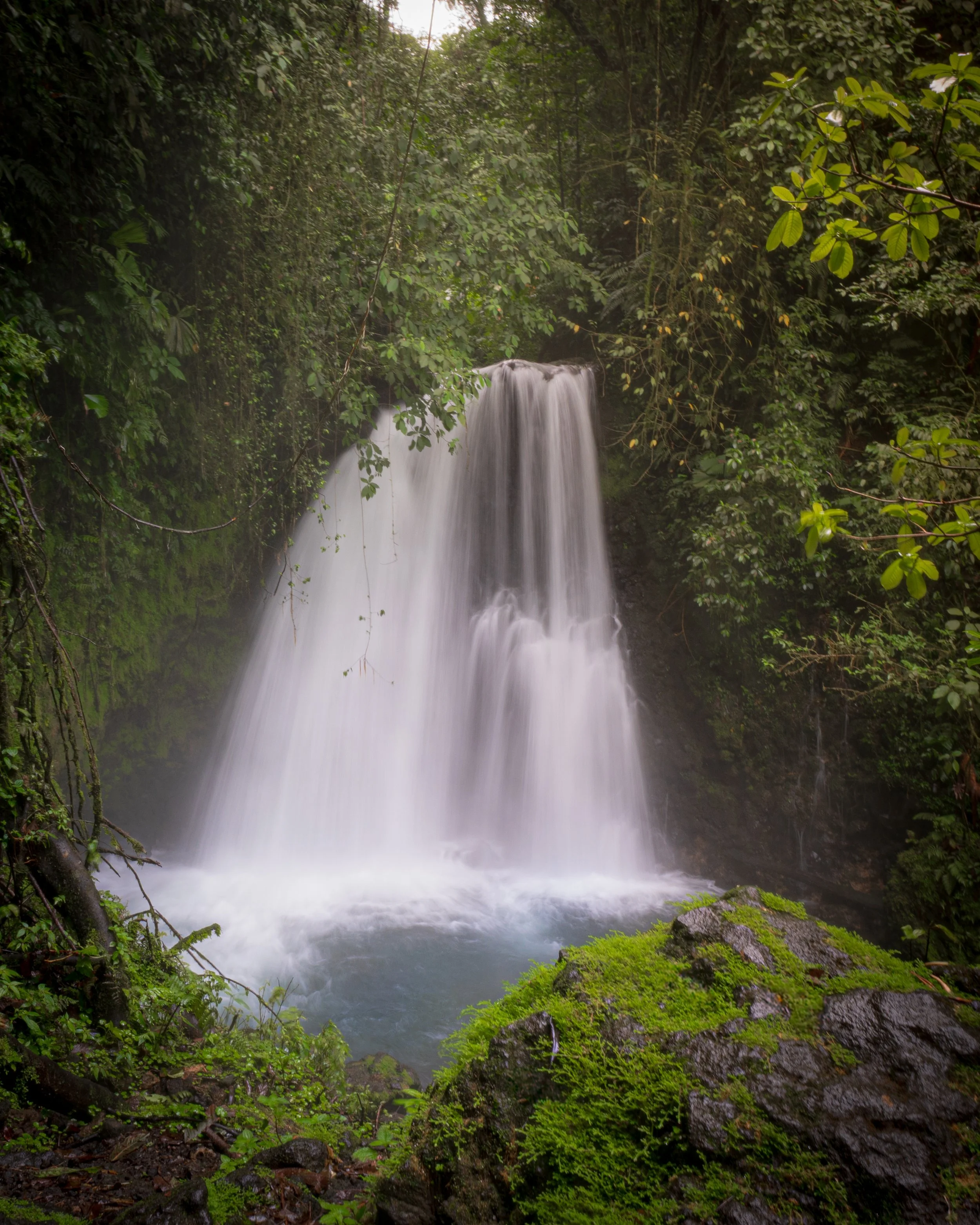
We passed a waterfall that blasted out so much mist and wind that I felt like I took a shower just by standing near it. And we were surprised by some capuchin monkeys moving through the canopy, jumping from branch to branch, and I swear, intentionally dropping things in front of us.
The volcano itself is about seven thousand years old, which, on the geological scale, basically makes it a toddler. It was quiet for centuries until 1968, when it erupted without warning and leveled several nearby villages. La Fortuna survived, which, according to some, is partly how the town ended up with its name. Lucky, indeed. This I learned, however, seems to be in dispute and may be a bit of retroactive history, as according to others, the town got its current name before 1968.
More recently however, Arenal has been inactive since 2010, but the landscape still carries the memory of that eruption. Parts of the park have trails that cross old lava flows. We didn’t make it to that route that day, but knowing the ground under your boots was once a moving river of fire gives the whole place a different energy.
Crowd-wise, it was calmer than we expected. We heard this park can get busy, especially around the holidays, but the trails felt peaceful. Just jungle, volcano, and that low hum of jungle life.
Day 6: The Warm Goodbye, and One Last Nocturnal Adventure
On our last full day in-country, we opted for a bit of relaxation in the Ecotermales hot springs. The pools were carved into the forest, fed by geothermal water warmed by the quiet volcano looming nearby.
Mineral-rich water. Slow rising steam. Tropical plants leaning over the pools. It was the perfect decompression after a week of hiking, wildlife, and humidity thick enough to swim in.
However, after an hour or so, we learned we are not ones for a traditional relaxation vacation. After drying off on the lounge chairs by the pools, we looked at each other and said, “So… wanna go find some more wildlife?”
And so we set off back to the nature preserve where we had our night-walk, but this time, with a slow, unguided day time walk through the jungle with binos in hand.
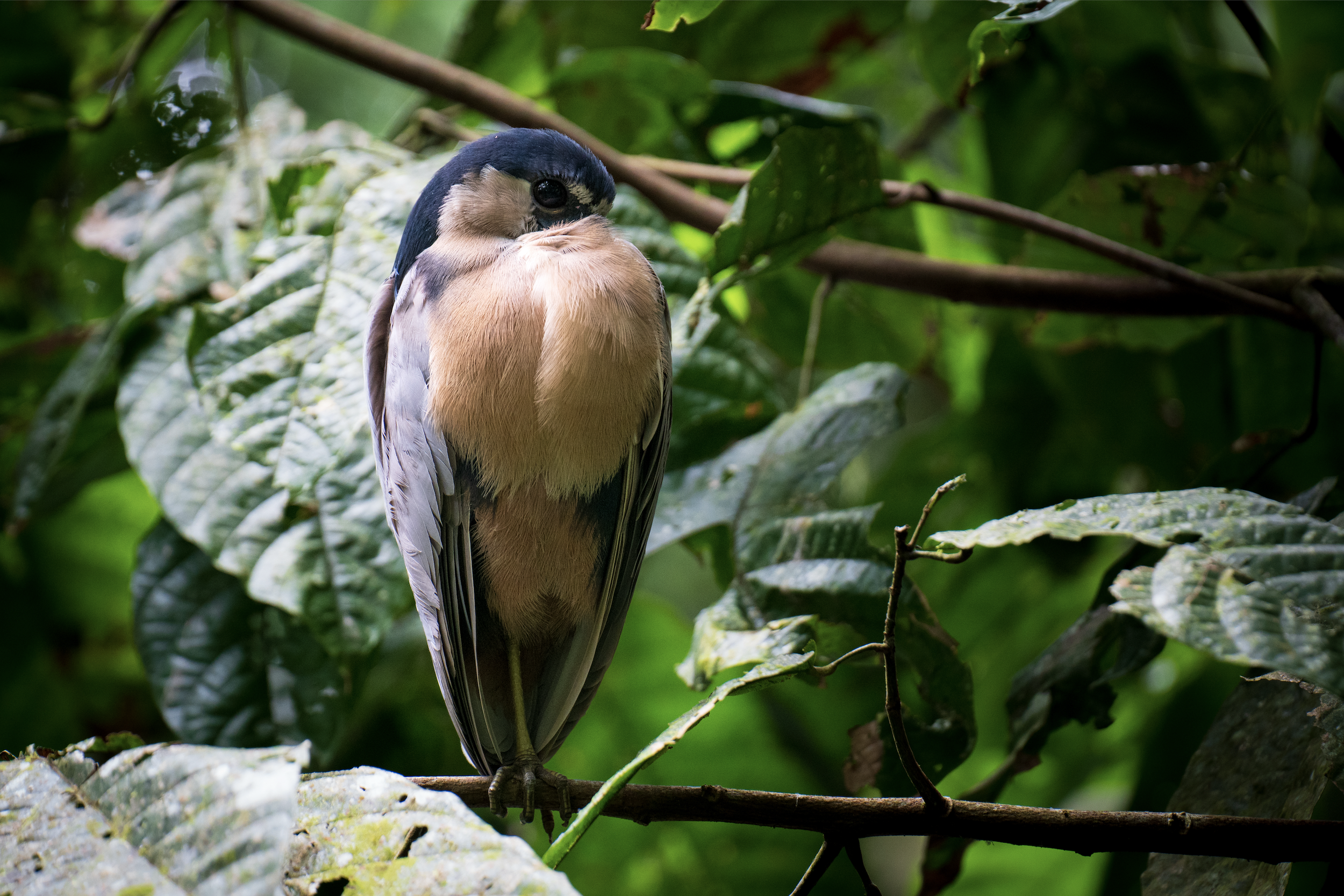
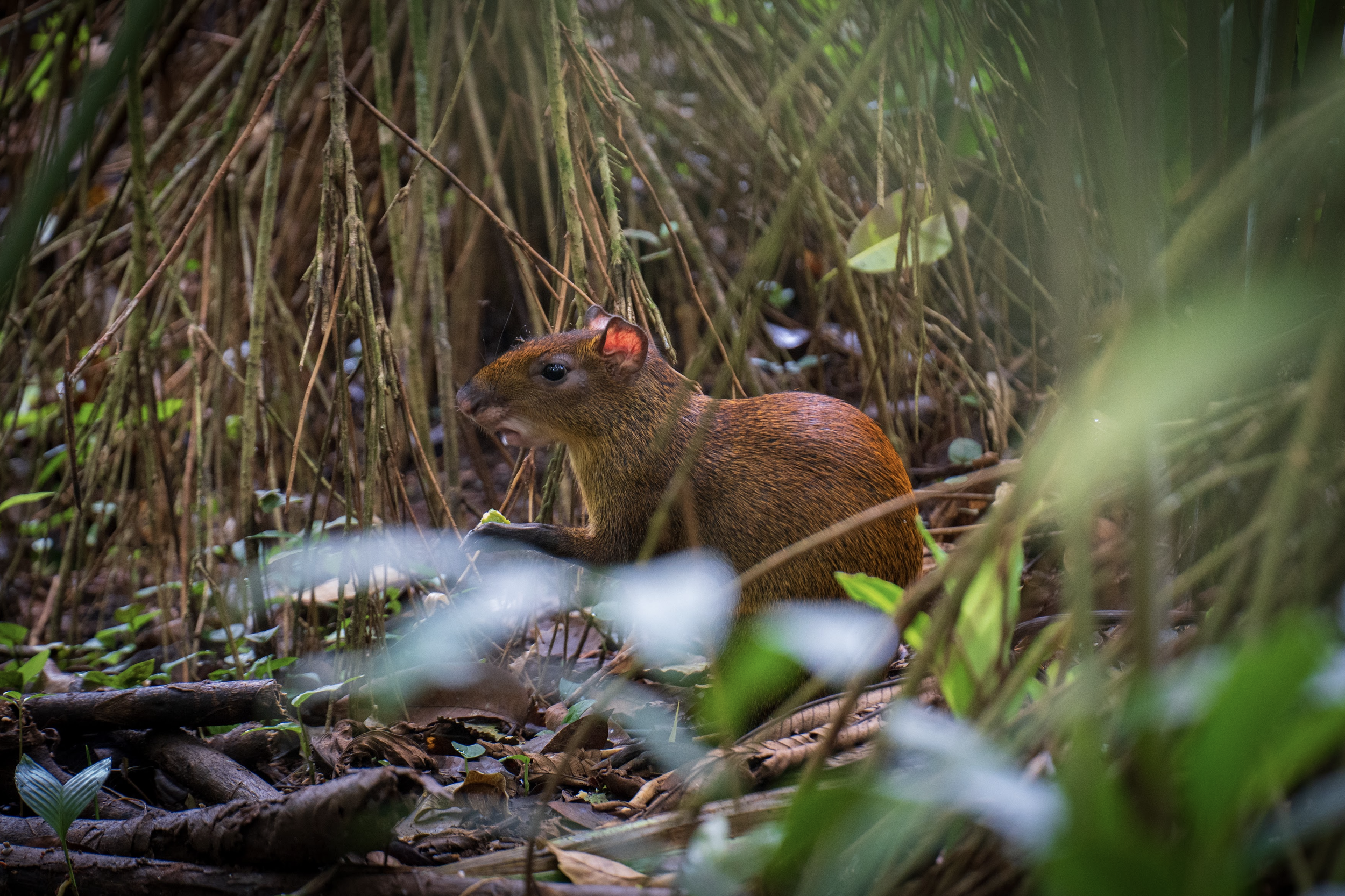
As the sunset, and we knew the trip was coming to a close, we decided we still did not have enough. We asked our host, Iván for a recommendation for another local night tour.
He sent us further up into the mountains where we learned an important lesson: when booking a jungle adventure, don’t skimp on the car rental.
As we made our way up to the mountain-top jungle lodge, there were a few times when our front-wheel drive Toyota Yaris sedan almost got stuck and/or slid off the muddy dirt roads into the valleys below.
Slow and bumpy, we eventually made it there alive. We were greeted by our guide asking,
“They didn’t tell you you needed a 4x4 to get up here?”
…
We started the tour as thunder and lightning flashed in the distance. Taking in the wildlife and I worried about the drive back down the mountain in the rain.
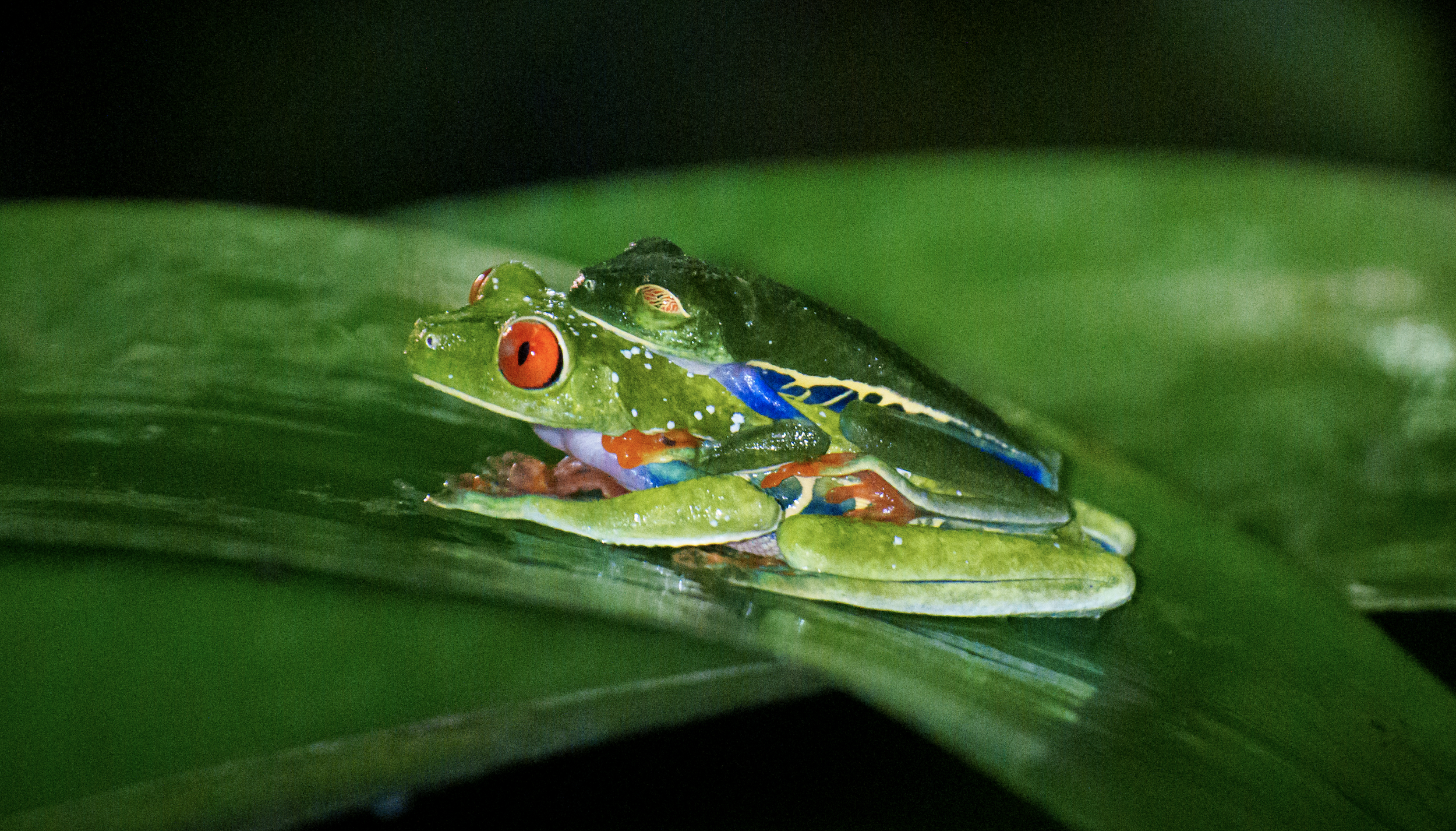
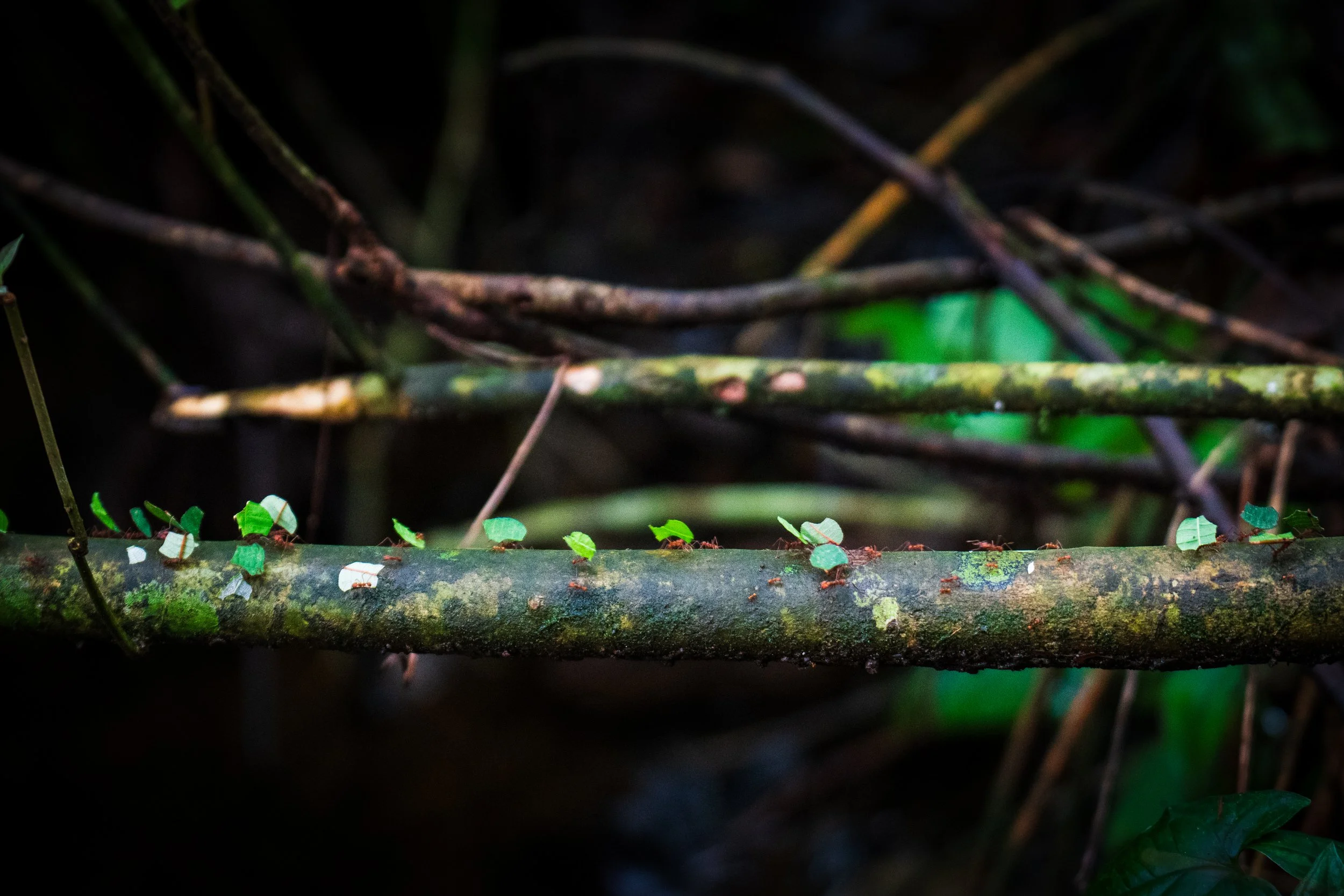
Spoiler alert: We made it back down alive.
Leaving the next morning felt odd. Like the world outside Costa Rica moved at the wrong speed.
But we brought a little pura vida home with us, tucked somewhere between the memory of a sloth’s sleepy grin and the roar of a volcano
… or perhaps it was the howler monkeys again.